
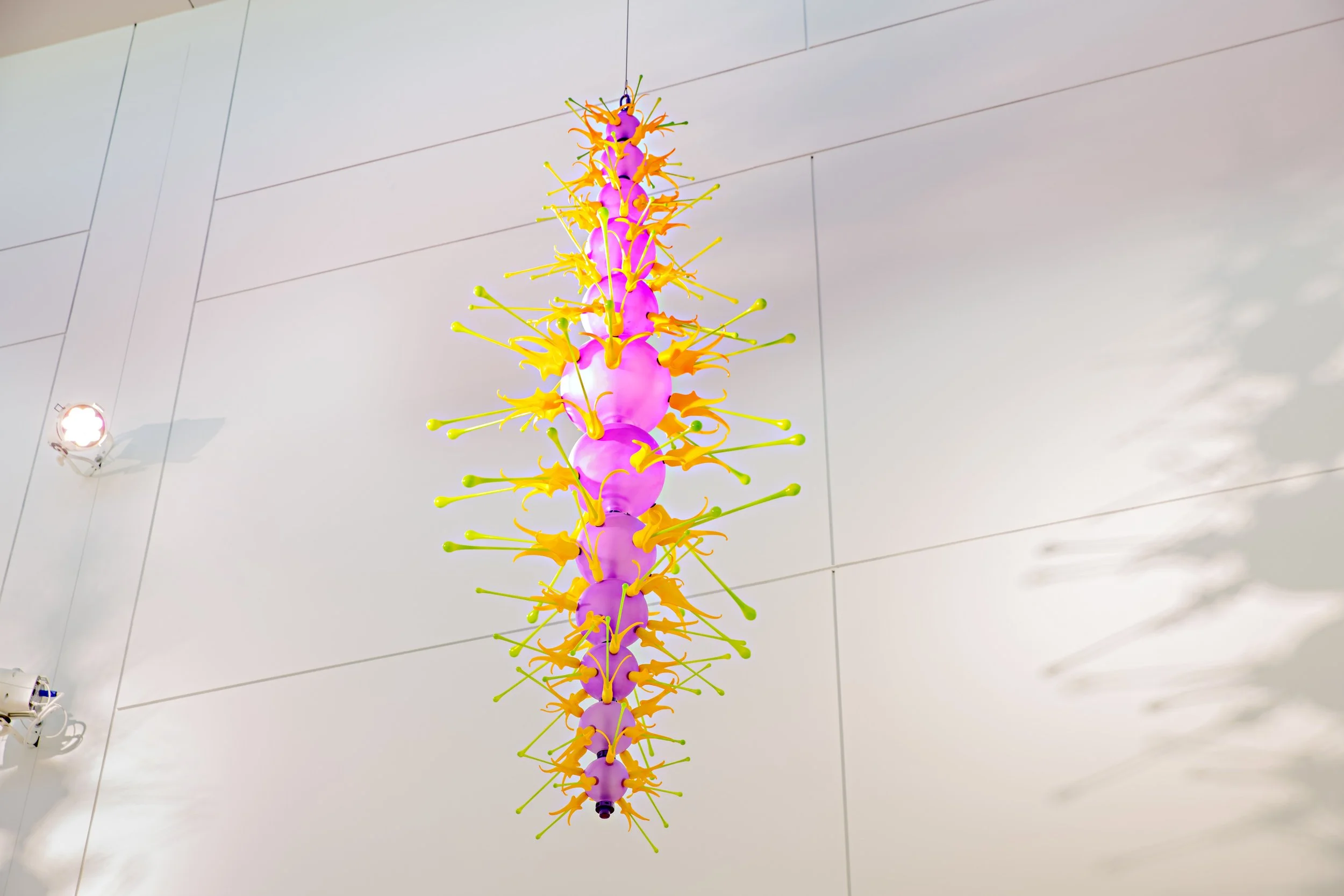
Charlotte-Douglas International Airport
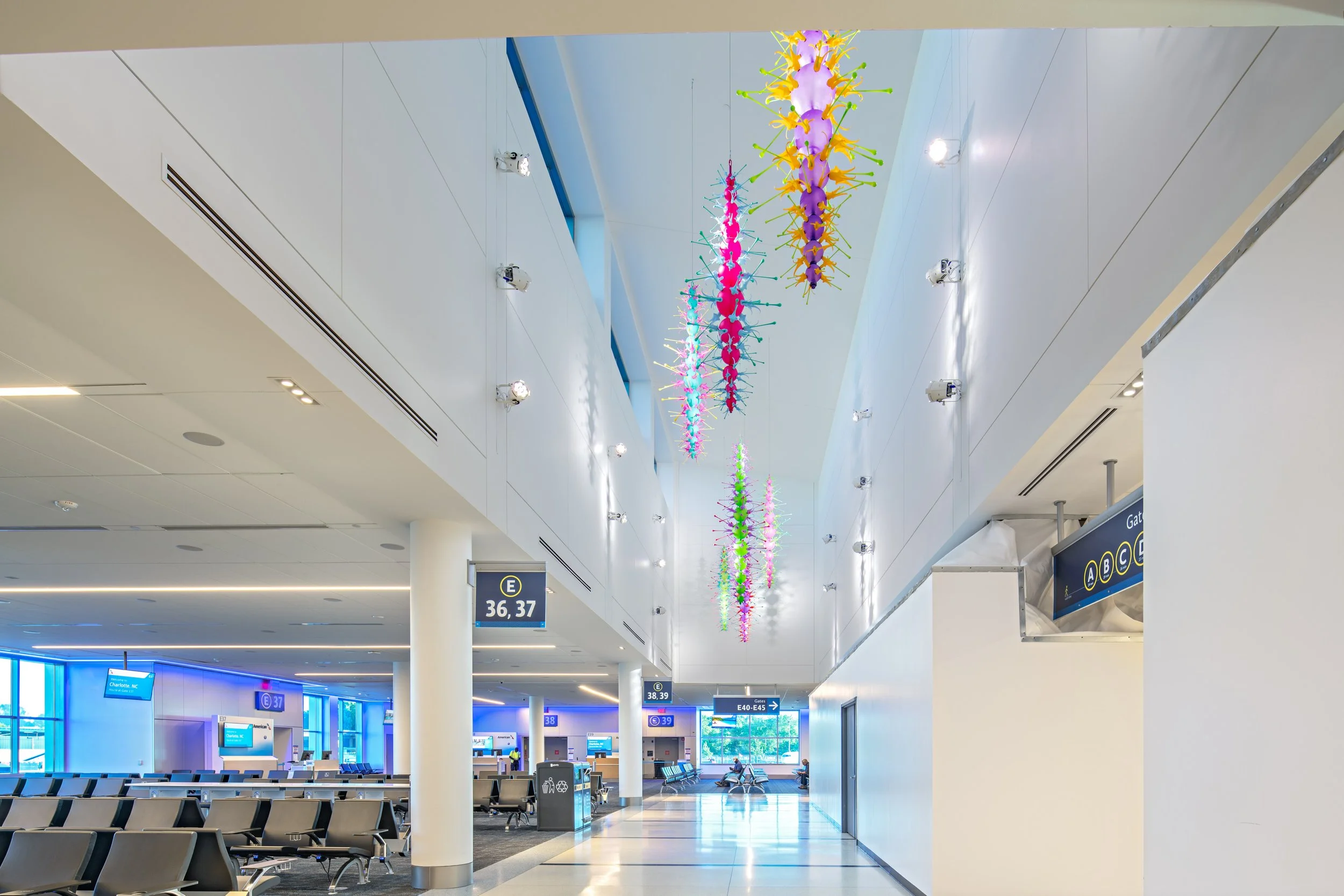
Twenty feet above the floors of Concourse E in the Charlotte Douglas International Airport hangs the culmination of three grueling years of work. In 2019, one year before the pandemic started, I was awarded the opportunity to create the largest installation of my glass blowing career, “Antinomies”. After twelve months of meetings and presentations, my design was approved for fabrication just days before the symptoms of the virus had reached the United States.


When everything began closing down and we were faced with a new reality, I wasn’t sure if the project would actually continue. Airports and flights were suddenly vacant, people were shuddering in their homes, and I was creating a series of works that not only looked like viruses but were scheduled to be installed in an airport during the pandemic.
When I conceived the working title “Antinomies”, it was intended to describe the common reaction of the viewer as a contradiction between two beliefs or conclusions that are in themselves reasonable, a paradox. The audience often thought the sculptures were composed of something other than glass, only to later discover that it indeed was and oftentimes, people would confuse the texture with plastic or ceramic due to the matte finish and hyper-saturated color schemes. The geometry of the work almost always conjured feelings of familiarity and comfort, with themes of aquatic life, atomic structures and flower.
Paradox and irony both involve incongruity: something turning out to be not as expected. What began as an initial attempt to find humor in playing with deceptive aesthetics and ambiguous shapes quickly turned into a dark irony. These sculptures which I had been creating for many years became timely and relevant. The perception shifted from flowers and atoms to something that reminded people of coronavirus.

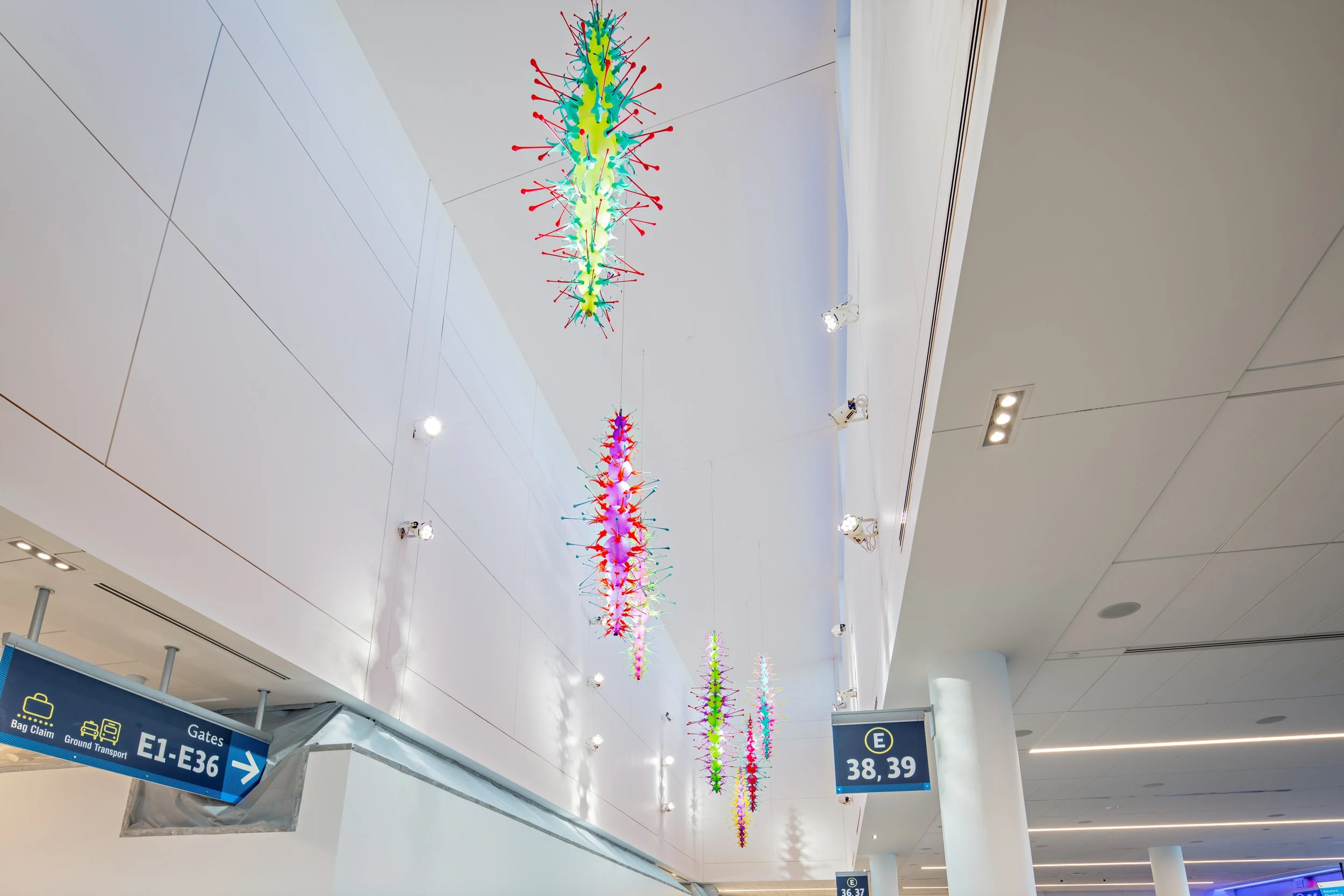


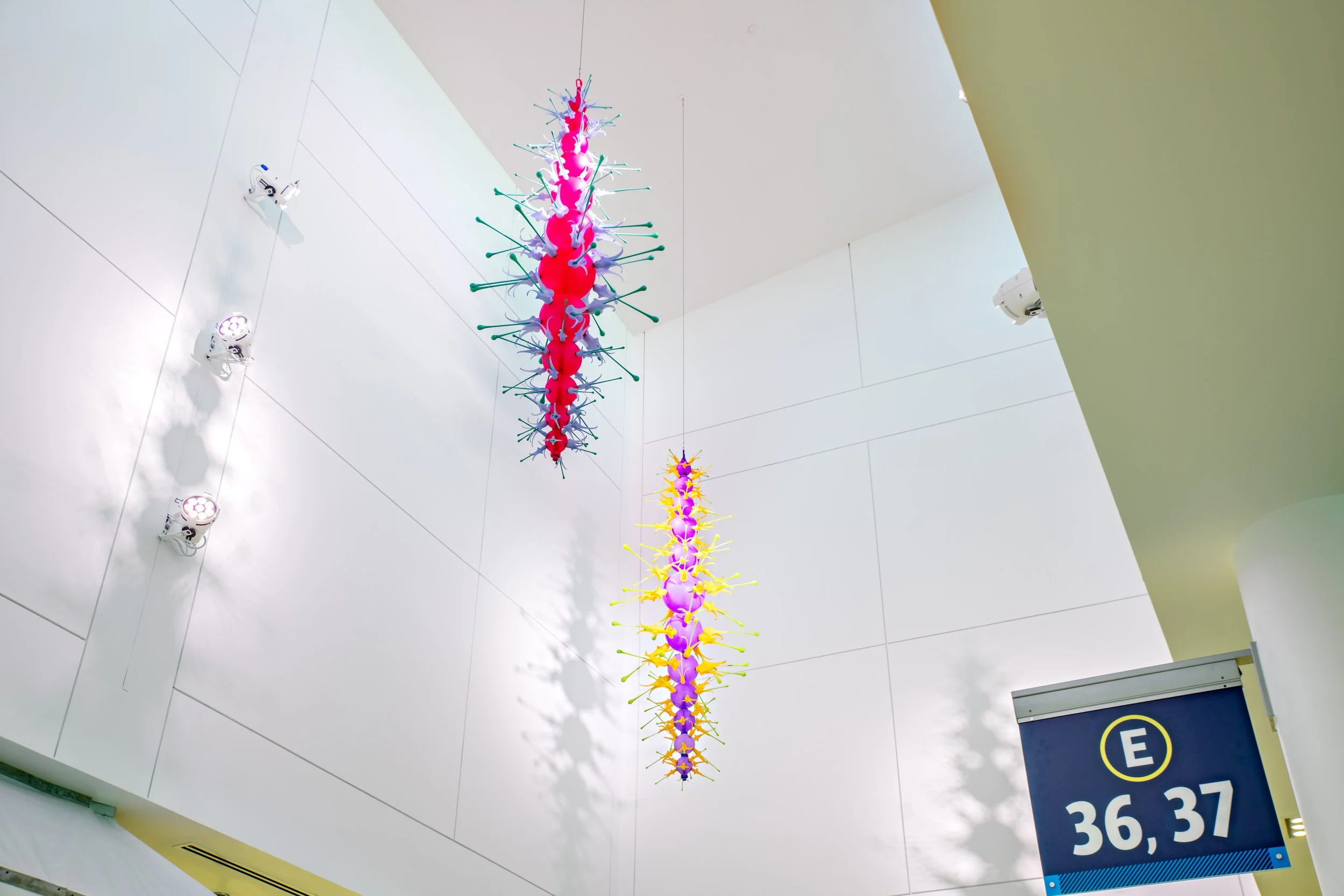

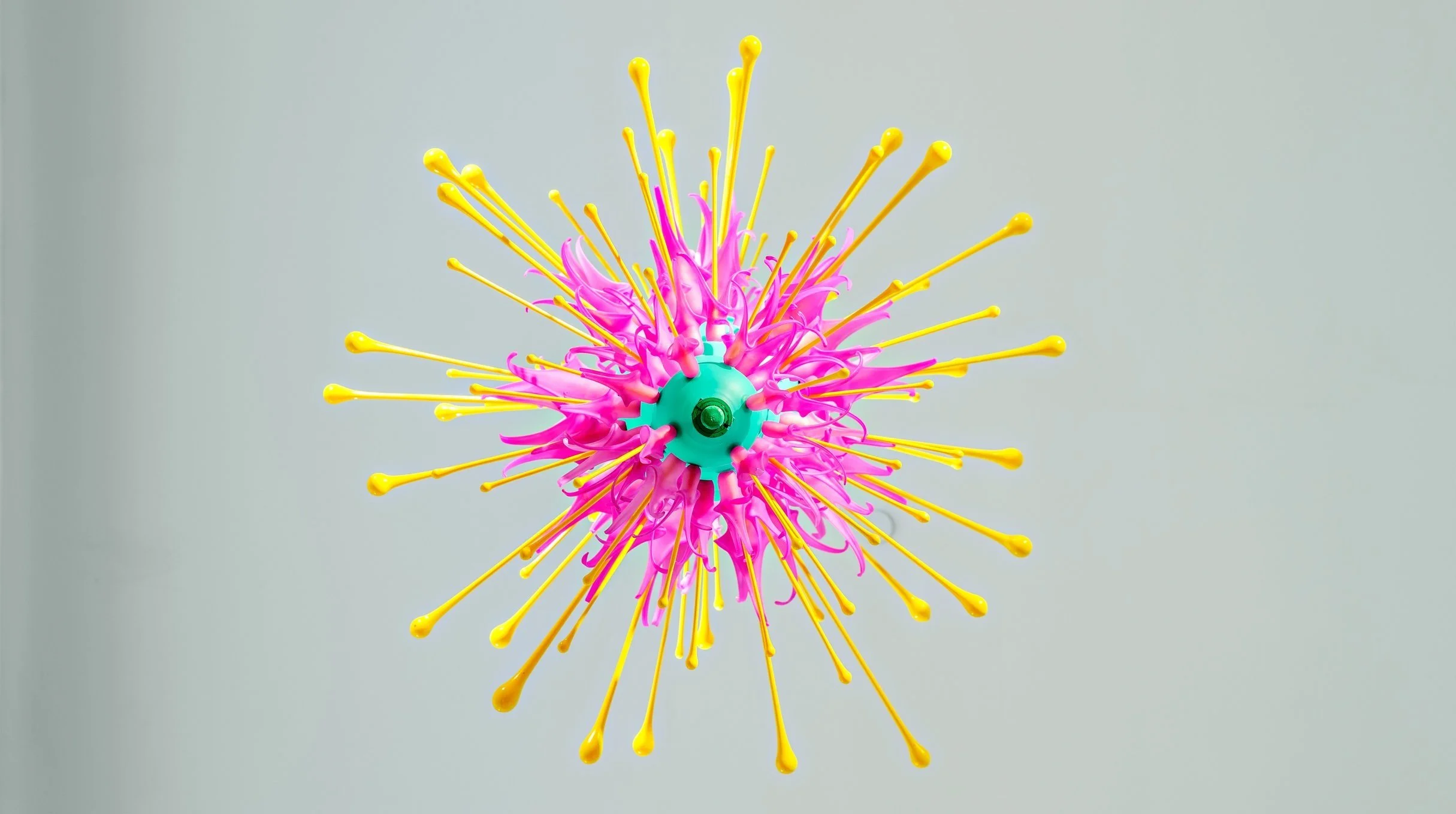

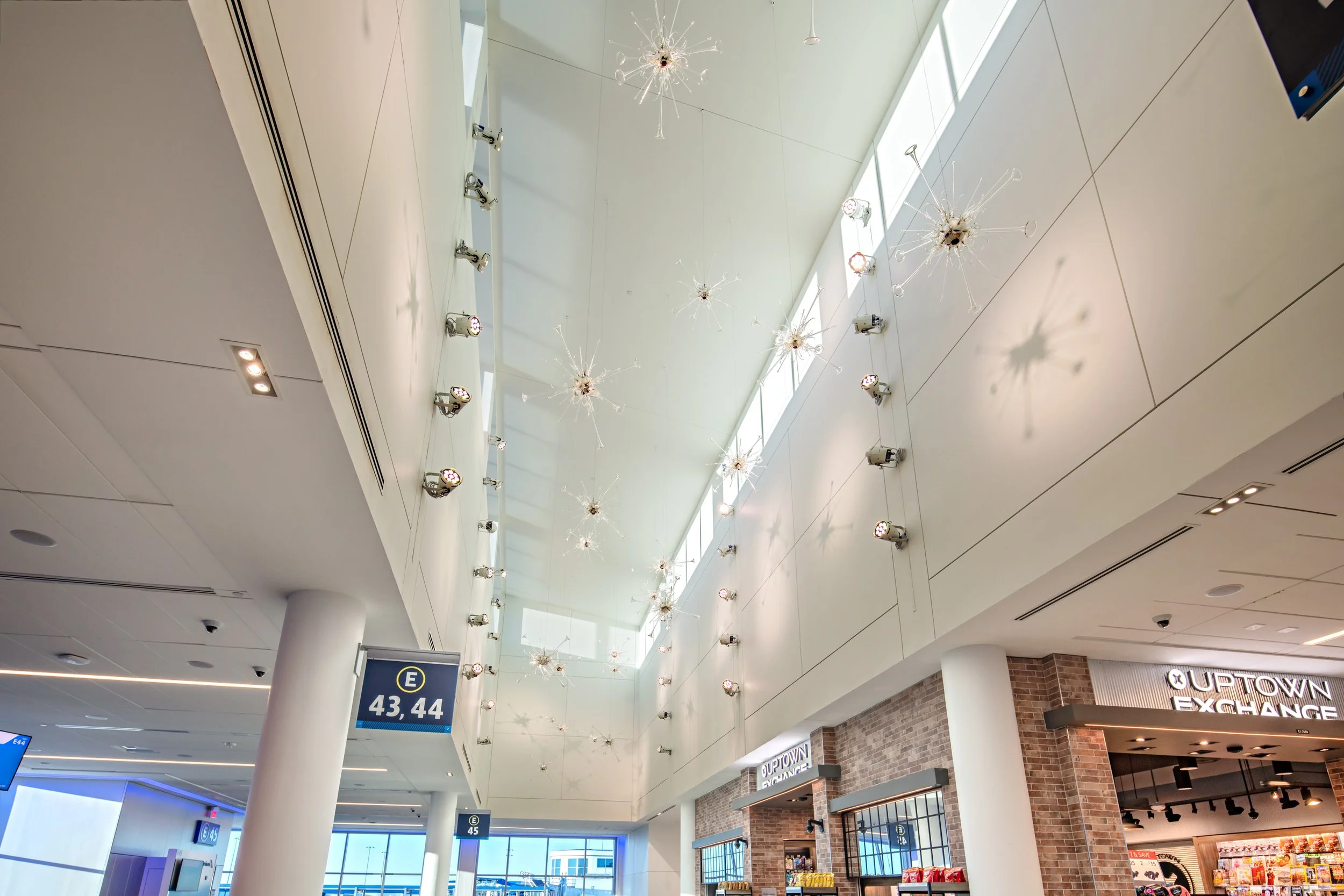
In April of 2020 I began the long process of sculpting thousands of pieces of blown glass shapes. When assembled, they would create seven suspended sculptures measuring nine-feet in length for the West clerestory and twenty-two, smaller mirrored sculptures, measuring three-feet in diameter for the East clerestory. The repetition of these modular glass components provides a visual rhythm with qualities accented by flourishes and outcroppings, making this installation the first of its kind.
Due to multiple delays, supply chain issues and construction hurdles, It would be another two years until the work was installed and the concourse opened. In all, Over three thousand pieces of blown glass were carefully textured and hand-painted to create these kinetic sculptures which are responsive to air currents from the environmental controls.
Using high-intensity colored luminaries, the programmed lighting sequences create color shifts on the glass pigments as well as shadows on the surrounding walls. Blue reads as purple, green becomes pink and only the true color of the glass is only shown when the natural light of the space cascades through the windows.


Because of the scale of the project and unique context surrounding it, we took the opportunity during the fabrication, assembly, and installation to document the progress and showcase it in a short film, telling the story of a glassblower creating virus-like sculptures for an airport during covid. This film is currently in the fundraising phase through Kickstarter and will hopefully be released later this year with your help.


