

Guide: How to become a glassblower?
/As glassblowing as an art form is gaining popularity, many are asking how to become a glassblower and the different paths they can take. Glass-blowing may be an appealing career for artistic individuals who want a job that allows them to express themselves creatively.
1.Research what it takes to be a glassblower
Glassblowing as a career should not be romanticized, as it requires a specific set of skills and tolerance for hot and potentially dangerous environments. Besides having excellent hand-eye coordination, manual dexterity, and color vision, anyone pursuing the path of becoming a glassblower should be armed with patience and creativity while having the stamina and strength to move heavy objects. Check out more about the specific skills needed to become a glassblower.
2. Attend Glassblowing class
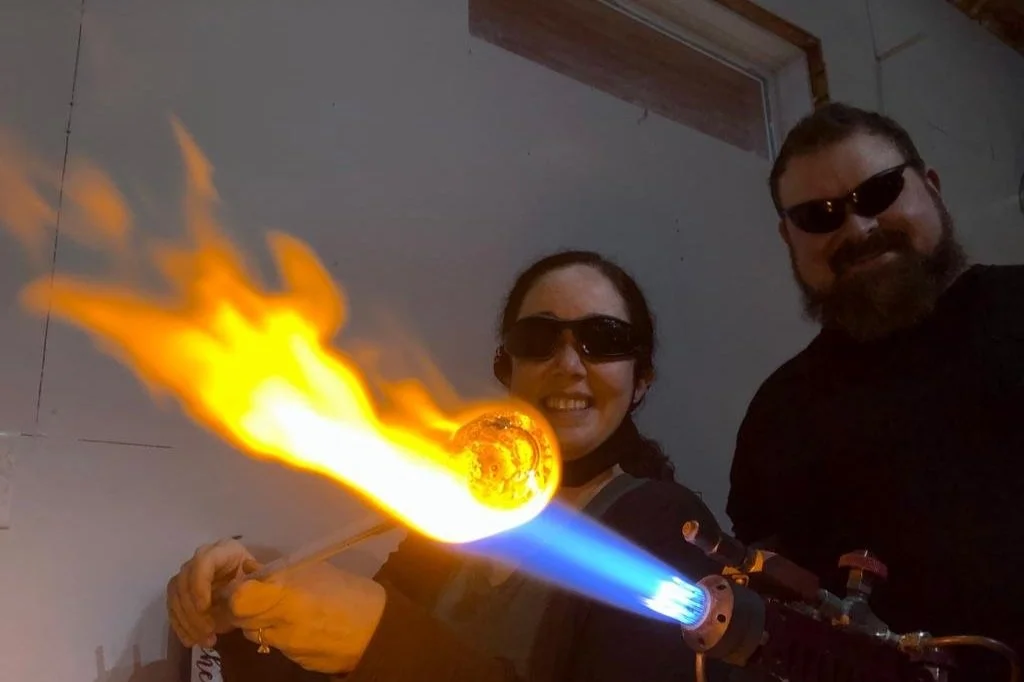
One of the best and safest ways to explore whether glassblowing is for you is to attend one of the glassblowing classes. Classes will give you hands-on instructions in safety and give you a fundamental insight into various glassblowing techniques. In this way, most of the glass blowers are introduced to the craft.
Glassblowing classes we offer at our studio range from half-day and 1-day classes to more immersed 2-day classes. The focus is on developing basic glassblowing skills such as gathering, shaping, and applying color to the glass. With this solid technical foundation, you could continue to practice at your small home workshop or enlist in a more advanced intermediate glassblowing class.
3. Enroll in Glassblowing college courses
Even though they are rare, glassblowing college courses are gaining in popularity. Programs like this provide well-rounded education not just on various methods used in glassblowing but also on the history of the craft. You can expect to learn this craft and others, as glassblowing doesn’t yet exist as a stand-alone degree. So be ready to dig your hands into clay, start sculpting wood and metal, and, of course, make a lot of sketches.
Unfortunately, in North Carolina, there isn’t a college course on glassblowing. Still, Kirkwood Community Colleague in Iowa and Salem Community Colleague in New Jersey offer glassblowing courses as part of their arts programs. The only degree-granting Glass program is available at the College for Creative Studies in Michigan.
4. Glassblowing apprenticeship
Learning about glassblowing through classes or colleague courses is one, but gaining practice and hands-on experience is another. Even though apprenticeships in glass blowing are less common than they once were, they are still a great way to hone practical skills as they allow you to learn the trade in a real environment, learning from a master glassblower.
They are invaluable for determined students who want to work in a studio or open their own business, but keep in mind that a professional glass blower will want an apprentice with some level of experience.

5. Practice, practice, practice
Practicing glassblowing can take many forms and shapes. One available to anyone is sketching and drawing objects you want to create. Besides being a great way to show artistic skills, it could prove valuable in the future when applying for an apprenticeship or even pitching an idea to a client.
Also, you can do studio rental and start bringing your sketches to life. This not only lets you practice your glassblowing skills, but it also offers a safe environment to take beginner steps.

If you feel committed to glassblowing, there is an option of setting up your own little workshop. But don’t be fooled and think it’s an easy and relatively cheap task. Glassblowing studios are a complex web of machines, tools, and dangerous materials, so be sure to get advice from a professional studio or master glassblower.
